From Fabric Swatch to Completed Room: Selecting Coordinated Sofa Covers and Bedding
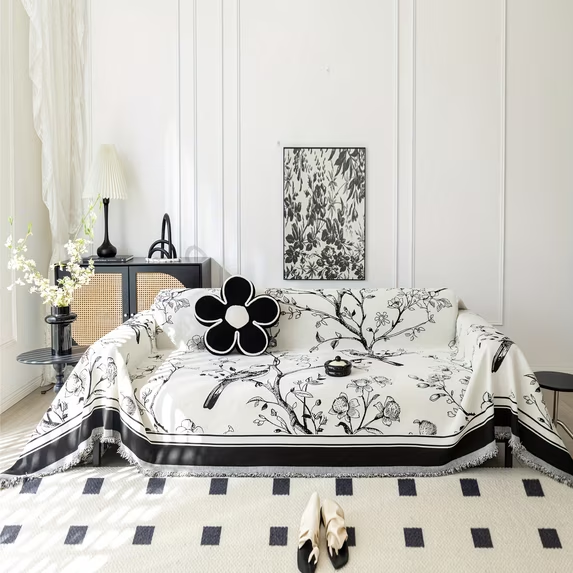
A fabric sample may feel wonderfully soft and look sophisticated, but still be inappropriate for the furnishing you have in mind. When that material is fitted across a sofa, made into a cover or stitched into bedding, its behaviour can change considerably. Its weight determines much of its drape, the visible surface changes with the lighting, and the construction affects how straightforward maintenance will be.
Deciding on a sofa cover, sofa panel or bed cover consequently goes beyond selecting an attractive colour. What matters more is how the completed item will function throughout an ordinary week. A room that accommodates regular family gatherings places different demands on furnishings than a bedroom mainly prepared for occasional visitors.
Assessing how the furnishings will be used from day to day makes it easier to evaluate holland velvet, mosha velvet, quilting and embroidery rather than judging each option purely by its looks. Such preparation may also reduce the risk of apparently minor sample decisions leading to costly problems after the finished furnishings have been delivered.
Consider Everyday Activities in the Room First
Before examining different materials, establish the intended use of each furnishing. A sofa where someone reads briefly each evening experiences different levels of use from one that remains occupied throughout the day. Repeated movement, animals, food and strong sunlight each influence what should receive attention when choosing a material.
For a sofa cover, establish whether its primary role is everyday protection, an aesthetic change or a detachable cover brought out from time to time. Although these objectives may overlap, one generally takes priority. For protection, dependable coverage and stable positioning are important, whereas an occasional decorative covering may prioritise graceful draping.
When assessing bedding, separate the finished appearance of the bed from the comfort required while sleeping. A bed cover may serve chiefly to create a neat-looking surface, while a comforter generally supplies an insulating layer. Recognising the main purpose of each item reduces the chance of choosing unnecessary weight or difficult bedding arrangements.
Describe your needs using straightforward, functional language. A requirement such as “easy to remove and dry” provides better guidance than “premium quality” since it identifies a practical feature that can be checked.
Look Beyond Colour to Understand a Fabric Swatch
A little fabric sample allows you to assess how the material feels, but cannot demonstrate every feature of a completed furnishing. Examine it standing up, lying flat and draped over a rounded shape. These basic tests make it easier to see whether the textile hangs smoothly, maintains its form or develops thick, bulky folds.
Look carefully at the visible surface and the underside. Its reverse construction can affect structural stability, overall thickness and ease of stitching. A pleasant-feeling fabric face does not guarantee compatibility with all sewing methods, particularly when multiple layers come together around seams or corners.
For holland velvet, assess the actual fabric sample and specification rather than assuming its name guarantees a particular fibre composition or quality. Different products can have different fibres, backing materials, pile characteristics and finishes. The same principle should guide your evaluation of mosha velvet, using both its stated specifications and the supplied sample.
Review the materials in the lighting where the finished furnishings will be placed. Natural light from windows and artificial evening lighting may expose different undertones. A neutral colour that looks warm on a sample board can look considerably cooler alongside established interior finishes.
Include Fabric Direction in Your Design Planning
Velvet surfaces can display different light and dark effects when seen from different angles. The variation is often most apparent where separate fabric sections sit alongside one another, where inconsistent cutting directions can produce an unintended patchwork effect even if every section comes from the same fabric roll.
When designing a sofa panel arrangement, decide on the intended pile direction before cutting. The direction of every exposed section should be selected deliberately. When the design deliberately includes contrasting surface directions, the sample needs to illustrate the intended contrast unmistakably.
This approach is equally important for removable cushions and individual covers. Pieces that look consistent while spread across a flat surface might appear noticeably different when arranged against an upright back cushion or laid across the horizontal seat surface.
Move and touch the fabric as it would be handled in everyday use. Light pressure or gentle brushing can temporarily alter how a pile surface looks. Check the expected material behaviour and confirm the appropriate maintenance procedure. Recognising ordinary variations in the visible surface makes it easier to separate normal fabric effects from genuine manufacturing inconsistencies.
Fit a Sofa Cover to Movement as Well as Measurements
A sofa is not an entirely fixed, unchanging structure. Cushions flatten under weight, occupants shift around and armrests affect how the fabric sits. Taking only the sofa's overall height and width can consequently overlook important fitting difficulties.
Measure and record seat depth, back height, armrest shape and cushion configuration. Check if the sofa cushions are fixed in place or can be taken off, while also noting any movable furniture components. A properly planned covering needs to allow all movable areas to function freely instead of pulling the fabric firmly across adjoining sections.
Consider how the extra fabric will be distributed. Too little material can produce tension around curved areas and corners, while excessive allowance can gather in folds or slip towards the front. A fitted, tailored design needs different measurement decisions from those used for a loose, throw-style sofa cover.
Where circumstances allow, test the proposed cover on the sofa, followed by several ordinary sitting and standing movements. Look for movement of the cover, uncovered seating areas or awkward ridges forming in the fabric. Such a realistic fitting test can identify problems during actual use which a neatly arranged product image may not show.
The ease of removing the cover is also important. A smart-looking cover that takes considerable time and effort to refit can become inconvenient if it needs frequent washing or cleaning.
Choose Quilting for Structure, Not Just Pattern
Quilting connects separate fabric layers with stitching, forming a textile surface that may offer added body, surface detail and a recognisable visual pattern. The final effect is influenced by the face material, internal filling, reverse layer, stitch design and construction quality.
A closely repeated quilted design may feel different from one with widely spaced stitches. The look of the quilting cannot independently demonstrate softness, warmth or durability. Assess the full layered construction rather than only its visible surface as changing the inner filling or reverse layer may alter how a familiar pattern behaves.
In a quilted sofa cover, consider whether the layers can follow the sofa's arms and seating contours comfortably. Too much thickness may make fitting difficult, especially when the material needs to tuck into tight spaces.
When selecting quilted bedding, consider the balance of flexibility and structure. A bed cover should drape over the mattress edges as intended without becoming cumbersome to fold or put away.
Inspect the underside just as thoroughly as the visible face. Inconsistent tension, free threads and gathered fabric around the stitches may signal faults that become easier to notice on a larger finished piece. A visually pleasing design is worthwhile only if the construction maintains its quality.
Look at the Practical Results of Multi Needle Stitching
With multi needle production, repeated sofa panel stitch designs can be made across several fabric layers. The usefulness of this method depends on the relationship between equipment settings, fabric materials and pattern design. The manufacturing technique alone cannot confirm the standard of the completed product.
During sample evaluation, look for consistency in the spacing and positioning of the stitched pattern. Inspect for skipped stitching, inconsistent tension or evidence that one layer has shifted against another. Such visible details offer a more dependable basis for evaluation than judging the production method from its machinery description alone.
Pattern placement should also be evaluated after individual pieces are cut. A stitch design that looks proportionate across a wide, uncut fabric length may become visually awkward on a slim sofa panel or close to a bed cover edge. The cutting plan should take the visible position and continuation of the repeated design into consideration.
With larger orders, base approval on a finished sample that represents the intended item rather than relying solely on a stitched swatch that has not been cut. The approved example should show the planned seams and edge finishing, because seams and edging can add bulk and affect the completed dimensions.
Position Embroidery with Comfort and Appearance in Mind
Thread-based embroidery provides an additional layer of visual detail, and the choice of placement can change both its visual effect and practical comfort. Decorative embroidery positioned on a cushion front encounters different kinds of pressure than stitching placed under the weight of a person sitting on the furniture.
Consider the thickness, stitch density and surface feel of the embroidery. Raised details or areas containing substantial stitching may feel hard against the body. On frequently occupied seating, placing the design away from the main sitting surface may create a more suitable compromise between decorative appeal and comfort.
Inspect the material around each stitched motif for pulling or changes in shape. Closely packed stitching can pull a lightweight foundation fabric inward unless the fabric and stabilising method are suitable. For raised-pile textiles, the stitching needs sufficient visual clarity to stand out against the surrounding material.
Examine the underside together with any lining intended to separate stitching from the body. Any free thread ends or uncomfortable areas should be checked and resolved before the item is approved.
A coordinated interior does not require every furnishing to feature embroidery. Using the same motif selectively across a few items may establish a sense of coordination without removing the calm effect of undecorated surfaces.
Balance the Look of Bedding with Its Practical Sleeping Comfort
A bed cover and a comforter can both form part of the same finished bedding arrangement, but each should be evaluated according to the purpose it is meant to serve. Because product names are not always applied consistently, confirm the actual materials and construction rather than trusting the name alone.
When choosing a decorative upper layer, consider dimensions, how it hangs and how much of the mattress it covers. A mattress with greater depth or a desire for extended side coverage may considerably alter the size that should be chosen.
When assessing a comforter, examine its filling specification, overall design and maintenance instructions. The amount of warmth provided depends on factors such as the filling material and loft; simply comparing product weights is not a dependable way to judge different comforters.
Think about the person responsible for arranging the bedding and using it overnight. A substantial arrangement of bedding layers can create a full appearance but prove troublesome to rearrange, clean or store. Using numerous decorative coverings may be impractical where they are routinely set aside at bedtime.
Choose a combination suited to the way the bedroom is used each day. The most practical combination continues to offer comfort and ease of handling once the novelty of the original appearance has passed.
Check Cleaning and Maintenance Needs Before Making a Final Choice
Cleaning and maintenance requirements should influence the decision from the outset. Review the care directions supplied for the complete finished item, because its outer fabric, filling, backing, embroidery and decorative trims may need different treatment compared with an untreated piece of fabric.
If the care instructions permit it and the method is appropriate, clean a representative sample through the cleaning method expected to be used in practice. Afterwards, compare the size, colour, texture and stitching with their original condition. A slight alteration in both length and width may have a noticeable effect on the fit of a tailored sofa cover.
Pay equal attention to how the furnishing will be dried. Handling substantial layered pieces during drying may be challenging in small spaces, while an ordinary household machine may lack the capacity for some items. Consider the available space and equipment when choosing bedding with significant bulk.
Do not presume that a protective fabric treatment prevents damage from every spill or cleaning agent. The outcome is determined by the specific protective treatment and what comes into contact with it.
Keep the confirmed maintenance information with the furnishing's specification. That information can guide later maintenance decisions and reduces the risk of accidental damage resulting from assumptions.
Approve the Whole Piece Before Repeating It
For orders containing several coordinated pieces, bring every specification together in one finished example. Colour, pile direction, sizing, pattern position and edge finishing need to be reviewed as elements of one finished furnishing instead of receiving separate approvals without considering the overall result.
Position the sample in its intended room and examine it from normal viewing angles. Try sitting on the covered sofa, folding the bed coverings and checking the finished corners. These simple everyday activities frequently reveal more useful information than spending a long time studying a flat piece of fabric.
Document the approved specifications clearly, including measurements and agreed tolerances. Where practical, retain a reference sample, especially when future purchases are expected to match the first order.
The completed sample review can also identify areas where a simpler approach would work better. Removing unnecessary layers or scaling back the decoration can improve everyday practicality while preserving the intended design.
Conclusion
Well-chosen furnishings begin by identifying exactly how they will be used. Evaluate a sofa cover for its fit and behaviour during movement, review velvet through a representative physical swatch, and evaluate quilting and embroidery in relation to the entire finished furnishing. For bedding, connect visual appearance with sleeping comfort and achievable cleaning requirements. These considerations turn a visually pleasing fabric into a practical finished product that continues performing well once the space becomes part of everyday life.