From Fabric Selection to Finished Interiors: Choosing Sofa Covers and Bedding That Complement Each Other
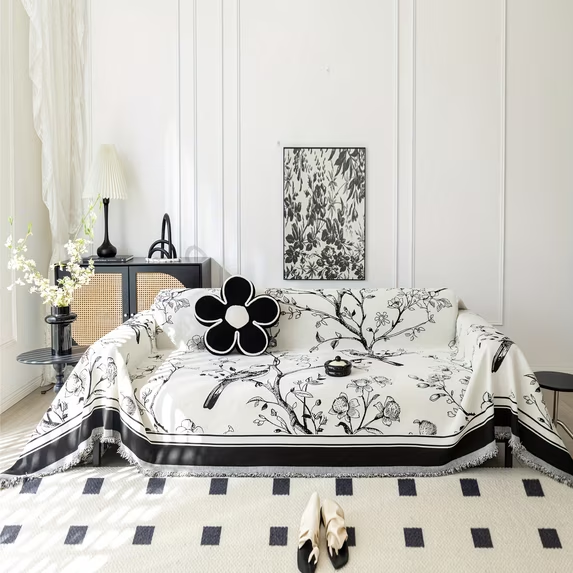
A fabric swatch can seem beautifully soft and visually elegant, while remaining unsuitable for its intended finished product. When that material is fitted across a sofa, made into a cover or stitched into bedding, it may behave quite differently. Its weight determines much of its drape, the visible surface changes with the lighting, and the way it is constructed influences the effort needed for upkeep.
Choosing a sofa cover, sofa panel or bed cover involves more than simply finding an appealing shade. The essential consideration is how the finished piece needs to behave in everyday situations. A living room regularly used for family gatherings calls for different textile choices than a bedroom mainly prepared for occasional visitors.
Considering these familiar everyday circumstances helps you assess holland velvet, mosha velvet, quilting and embroidery more effectively rather than judging each option purely by its looks. This approach also helps prevent small decisions made during sampling from causing expensive difficulties after the finished furnishings have been delivered.
Consider Everyday Activities in the Room First
Before you begin comparing fabrics, identify how each furnishing is likely to be used. A sofa used for an hour of reading at night has different practical requirements than a sofa that sees frequent use from morning until evening. Regular movement, pets, food and exposure to direct sunlight all affect which characteristics deserve priority during selection.
With a sofa cover, first decide whether its chief purpose is daily protection, a decorative update or a removable covering for occasional use. While several goals may apply, one commonly determines the main requirements. A protective covering needs consistent coverage and a position that stays secure, but a cover intended mainly for decoration may give greater importance to its drape.
In the bedroom, distinguish the appearance of a neatly made bed and the practical comfort necessary overnight. A bed cover might be intended primarily to give the bed a tidy appearance, but a comforter is commonly used to provide insulating warmth. Understanding which function is most important can prevent unwanted bulk and overly complicated layers.
Put these expectations into specific, everyday words. A requirement such as “easy to remove and dry” provides better guidance than “premium quality” as it points towards something measurable through normal use.
Look Beyond Colour to Understand a Fabric Swatch
A little fabric sample allows you to assess how the material feels, but cannot demonstrate every feature of a completed furnishing. Hold the sample vertically, spread it flat and bend it around a curved surface. Such simple adjustments help indicate whether the material falls softly, retains its shape or gathers into heavy folds.
Examine the fabric face as well as its backing. The backing can play an important part in the fabric's stability, depth and behaviour during sewing. A material that looks attractive on the surface may not work well with every construction process, most notably where different layers meet along seams and at corners.
While reviewing holland velvet, focus on the precise material offered without assuming the product name establishes fixed material characteristics. Different products can have different fibres, backing materials, pile characteristics and finishes. Apply the same careful approach to mosha velvet, examining the product details together with a representative swatch.
Review the materials in the lighting where the finished furnishings will be placed. Light entering through windows and illumination from evening lamps can reveal varying undertones. A seemingly warm neutral shade displayed on a sample board may seem distinctly cooler beside the existing flooring or furniture.
Consider the Direction of Velvet Surfaces When Designing
The appearance of velvet may shift between lighter and darker tones as the viewing direction changes. The variation is often most apparent where separate fabric sections sit alongside one another, because mismatched cutting directions can make the finished surface look patchy despite all the pieces being cut from one roll.
When designing a sofa panel arrangement, decide on the intended pile direction before cutting. The direction of every exposed section should be selected deliberately. If different pile directions are intentionally being used as a design feature, the contrast should be evident in the representative sample.
The same consideration extends to detachable cushions and separate coverings. Fabric components that seem identical in a horizontal position may take on a different appearance once positioned vertically against the backrest compared with how they look when placed across a seat.
Handle the fabric in ways that reflect its normal use. A pile fabric's appearance may change briefly after gentle pressure or brushing. Ask about normal surface changes and the correct way to care for the fabric. Having accurate expectations about changes in the pile's appearance makes it easier to separate normal fabric effects from genuine manufacturing inconsistencies.
Consider Movement Alongside Measurements When Fitting a Sofa Cover
Unlike a solid box, a sofa has surfaces that move and compress. Seat cushions give way, people move while seated and the arms alter the path of the material. Relying solely on total width and height measurements can consequently overlook important fitting difficulties.
Document the seating depth, height of the back, shape of the arms and arrangement of cushions. Check if the sofa cushions are fixed in place or can be taken off, while also noting any movable furniture components. A properly planned covering needs to allow all movable areas to function freely instead of pulling the fabric firmly across adjoining sections.
Think carefully about where any spare material will sit. Too little material can produce tension around curved areas and corners, whereas too much material might bunch together or shift towards the front edge. A closely shaped cover requires a different approach to measuring compared with a relaxed throw-style covering.
Whenever possible, carry out a trial fitting, followed by several ordinary sitting and standing movements. Look for movement of the cover, uncovered seating areas or awkward ridges forming in the fabric. Such a realistic fitting test can identify problems during actual use which a neatly arranged product image may not show.
The ease of removing the cover is also important. A smart-looking cover that takes considerable time and effort to refit might not suit a household where frequent cleaning is expected.
Choose Quilting for Structure, Not Just Pattern
The quilting process secures layers of material together through stitched lines, producing a surface that can provide texture, body and a distinctive pattern rhythm. Its finished appearance and behaviour reflect the face fabric, filling material, backing, stitch layout and overall manufacturing quality.
Tightly arranged quilting lines may produce different characteristics than widely separated stitching. Nevertheless, visual appeal by itself cannot confirm softness, insulation or long-term durability. Test a representative sample containing the face, filling and backing since the same design can behave differently when another backing or filling is used.
For a sofa cover, check whether the quilted material curves comfortably around the arms and seat edges. Excessive bulk can create problems when positioning the cover, most notably around narrow areas used for securing or tucking the cover.
For bedroom textiles, assess the relationship between softness of movement and shape retention. A suitable bed cover should hang over the mattress edges in the planned way without becoming cumbersome to fold or put away.
Inspect the underside just as thoroughly as the visible face. Uneven stitching tension, loose thread ends and unwanted puckering might reveal construction problems that become increasingly visible over a large area. Even a particularly attractive quilting pattern is valuable only when the workmanship stays consistent.
Assess How Multi Needle Production Affects Finished Textiles
With multi needle production, repeated stitch designs can be made across several fabric layers. The value of this technique is determined by the suitability of the settings, materials and stitching pattern. The manufacturing technique alone cannot confirm the standard of the completed product.
When inspecting a production sample, check that repeated stitches retain even spacing and alignment. Inspect for skipped stitching, inconsistent tension or evidence that one layer has shifted against another. Such visible details offer a more dependable basis for evaluation than judging the production method from its machinery description alone.
Pattern placement should also be evaluated after individual pieces are cut. A repeating motif that seems balanced over a long piece of fabric may become visually awkward on a slim sofa panel or close to a bed cover edge. For this reason, the cutting arrangement needs to account for the exposed pattern repetition.
When arranging larger quantities, request approval of a representative completed product instead of depending entirely on an uncut piece of stitched fabric. The approved example should show the planned seams and edge finishing, since they can increase material thickness and alter the resulting size.
Position Embroidery with Comfort and Appearance in Mind
Embroidery introduces decorative detail through stitched thread, and the choice of placement can change both its visual effect and practical comfort. A stitched motif on a cushion face is subjected to different pressures from embroidery located directly beneath someone seated on a sofa.
Assess the amount of stitching and the texture produced by the selected motif. Thickly embroidered sections can create firm areas where they touch a person. With furniture intended for daily seating, choosing a less prominent location outside the usual contact zone can offer a better balance between visual interest and practical comfort.
Examine nearby fabric carefully to identify any distortion caused by the embroidery. Dense threadwork may draw a thin base material towards the centre of the motif when the base and supporting materials are not appropriately matched. When embroidery is applied to pile fabrics, the motif must also remain clearly defined so that the pattern can still be distinguished from the background.
Look at the back of the embroidered area and any protective lining beneath it. Unsecured thread ends and coarse or uneven sections should be addressed before approval.
There is no need to embroider every textile item to achieve a consistent room design. Applying one recurring design to carefully chosen furnishings may establish a sense of coordination without removing the calm effect of undecorated surfaces.
Separate Bedding Appearance from Sleeping Comfort
A bed cover and a comforter can both form part of the same finished bedding arrangement, although their suitability should be judged against their separate intended functions. Since bedding terminology may differ between products, confirm the actual materials and construction rather than trusting the name alone.
With a decorative bed covering, examine the measurements, fall of the fabric and required coverage along the mattress. An especially deep mattress or the wish for a longer drop along its sides can make a substantial difference to the appropriate bed cover measurements.
For a comforter, review the type of filling, complete construction and recommended care. The amount of warmth provided depends on factors such as the filling material and loft; simply comparing product weights is not a dependable way to judge different comforters.
Take account of how the bed will be made and used by the household. A substantial arrangement of bedding layers can create a full appearance while making everyday adjustment, washing and storage inconvenient. Multiple decorative layers may also serve little purpose when they are taken off the bed every evening.
Put together an arrangement that works with everyday bedroom habits. A well-chosen arrangement remains comfortable and straightforward to manage after the first carefully styled presentation.
Assess Fabric Care Requirements Before Confirming the Purchase
Care considerations need to form part of the selection process from the beginning. Review the care directions supplied for the complete finished item, as the front fabric, filling, underside, embroidered sections and trims may require separate care considerations compared with an untreated piece of fabric.
If the care instructions permit it and the method is appropriate, clean a representative sample with the same procedure planned for regular care. Afterwards, compare the size, colour, texture and stitching with their original condition. Relatively small dimensional changes across different directions may have a noticeable effect on the fit of a tailored sofa cover.
Pay equal attention to how the furnishing will be dried. Handling substantial layered pieces during drying may be challenging in small spaces, and domestic washing machines might not accommodate every furnishing. Think about such practical restrictions before committing to thick bedding.
A fabric protection finish should not be taken as evidence of resistance to every stain or cleaning substance. Its suitability depends on the particular treatment and the substance involved.
Keep the confirmed maintenance information with the furnishing's specification. That information can guide later maintenance decisions and reduces the risk of accidental damage resulting from assumptions.
Approve the Whole Piece Before Repeating It
For orders containing several coordinated pieces, bring every specification together in one finished example. The chosen shade, direction of the pile, measurements, motif placement and edging should be checked together as parts of the complete article instead of treating each feature as an unrelated approval.
Arrange the representative item in the planned setting and assess it from typical viewpoints. Use the covered seating, fold the bedding as normal and inspect how the edges and corners sit. Ordinary actions of this kind often uncover more compared with prolonged inspection of an unshaped quilting textile sample.
Keep a clear written record of what has been approved, together with sizes and agreed allowances. If possible, preserve a sample for later comparison, particularly if additional items will need to coordinate with the original pieces.
The final assessment is also an opportunity to remove unnecessary complexity. Reducing excess thickness or limiting decorative details might enhance usability without reducing the visual quality of the finished piece.
Conclusion
Creating practical, attractive furnishings requires a clear picture of how each piece should function. Assess a sofa cover according to how securely it fits and responds to everyday activity, examine velvet using the actual material sample, and consider quilting and embroidery as elements of the complete product construction. For bedding, connect visual appearance with sleeping comfort and achievable cleaning requirements. These considerations turn a visually pleasing fabric into a practical finished product that continues performing well once the space becomes part of everyday life.